Head of Household (HOH) status remains one of the most valuable filing categories for single parents and caregivers. In 2025, HOH filers continue to receive a larger standard deduction and more favorable tax brackets than single filers, helping reduce overall tax liability. With new tax rules taking effect under the One Big Beautiful Bill Act (OBBB), understanding these updates is crucial for maximizing your refund.
Who Qualifies as Head of Household in 2025?
According to updated guidance, Head of Household status for 2025 applies to unmarried taxpayers who financially support a qualifying person and pay more than half the cost of maintaining a home. Key requirements include:
- You must be unmarried (or considered unmarried) for the tax year.
- You must pay over 50% of household expenses, including rent, mortgage, utilities, and groceries.
- A qualifying person must live with you for more than 183 days, unless the dependent is a parent you support while they live elsewhere.
- You must be a U.S. citizen or legal resident for the full year.
This status is commonly used by:
- Single parents
- Divorced or legally separated parents
- Caregivers supporting dependent relatives
2025 Head of Household Tax Brackets
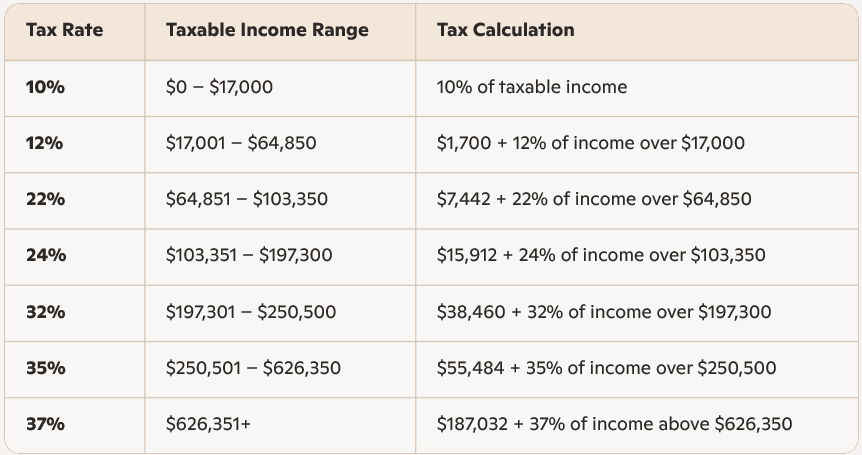
The 2025 federal tax brackets for HOH filers reflect inflation adjustments and legislative changes under OBBB. These brackets determine how much of your income is taxed at each rate.
2025 HOH Tax Brackets
These brackets are significantly more favorable than those for single filers, especially in the lower and middle-income ranges.
Standard Deduction for HOH Filers in 2025
The IRS increased standard deductions for 2025 due to inflation and legislative changes. HOH filers receive a larger deduction than single filers, reducing taxable income and overall tax owed.
While the exact 2025 HOH standard deduction amount is not listed in the search results, IRS guidance confirms that HOH filers always receive a higher deduction than single filers and benefit from better tax rates.
Child Tax Credit (CTC) and Other Credits in 2025
The OBBB legislation introduced major changes to credits beginning in 2025. While the search results do not list specific CTC amounts, HOH filers typically benefit the most from:
- Child Tax Credit (CTC)
- Earned Income Tax Credit (EITC)
- Child and Dependent Care Credit
- Education credits (AOTC, LLC)
Because HOH filers often have dependents, these credits can significantly reduce tax liability or increase refunds.
What Expenses Count Toward Maintaining a Home?
To qualify for HOH, you must pay more than half the cost of keeping up your household. Eligible expenses include:
- Rent or mortgage payments
- Property taxes
- Utilities
- Home repairs
- Home insurance
- Groceries
- Other household necessities
Expenses not included:
- Clothing
- Transportation
- Medical costs
- Vacations
Key 2025 Tax Deadlines
- Tax Day: April 15, 2026
- Final estimated tax payment for 2025: January 15, 2026
- Extension deadline: October 15, 2026
Example: HOH Tax Calculation for 2025
A Head of Household filer with $70,000 in taxable income would fall into the 22% bracket.
Using the IRS formula for HOH filers:
- Base tax: $7,442
- Plus 22% of income over $64,850
- Excess income: $70,000 – $64,850 = $5,150
- Additional tax: 22% × $5,150 = $1,133
Total tax owed: $7,442 + $1,133 = $8,575
Final Thoughts
Head of Household filers enjoy some of the most advantageous tax rules in 2025, including wider tax brackets, a larger standard deduction, and access to valuable credits. With the new tax law changes under OBBB, staying informed is essential for maximizing your refund and avoiding filing mistakes.