The IRS has released the official 2025 federal income tax brackets, and while the seven tax rates remain the same, the income thresholds have shifted upward due to inflation adjustments. These changes affect how much Americans will owe when filing their 2025 tax returns in early 2026. Understanding where your income falls—and how to plan around the new thresholds—can help you reduce your tax bill and optimize your financial strategy.
Overview of the 2025 Federal Tax Brackets
For 2025, the IRS continues to use seven marginal tax rates:
10%, 12%, 22%, 24%, 32%, 35%, and 37%.
Although the rates themselves did not change, the income ranges tied to each bracket increased modestly—about 2.8% on average, according to U.S. Bank reporting referenced in recent tax coverage. This is a smaller adjustment compared to the unusually large inflation-driven increases of 2023 and 2024.
2025 Tax Brackets for Each Filing Status
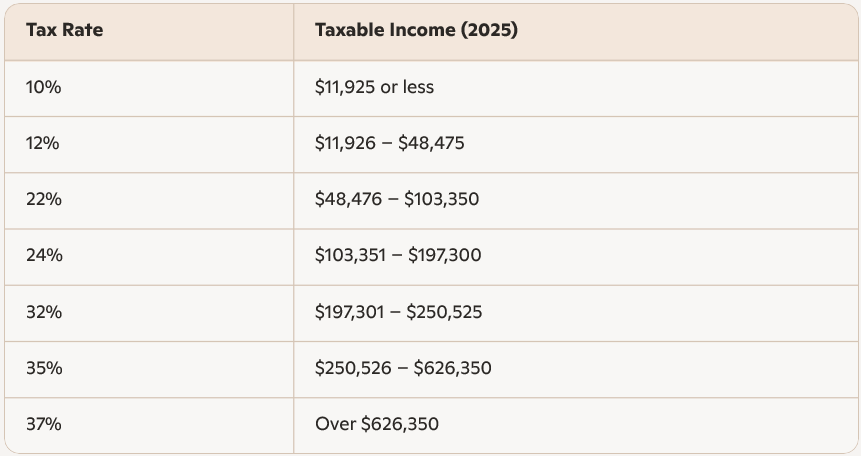
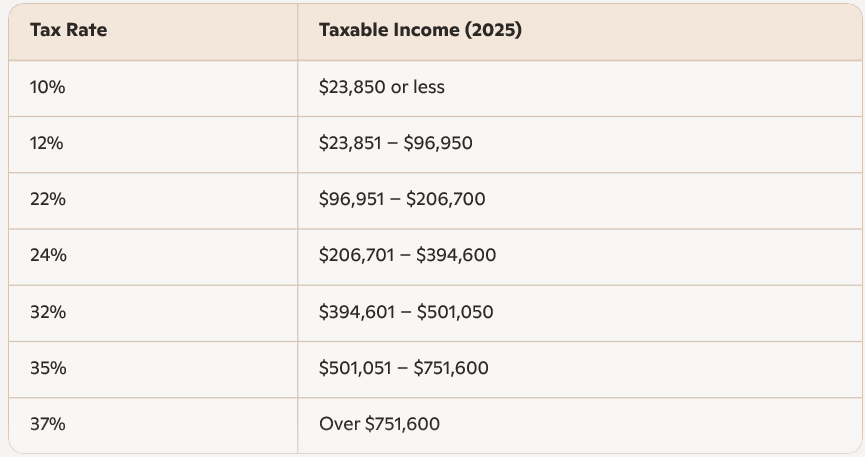
Below are the official IRS‑indexed 2025 income thresholds for each filing status, based on the most recent IRS tables and financial institution summaries.
Single Filers
Married Filing Jointly
Head of Household
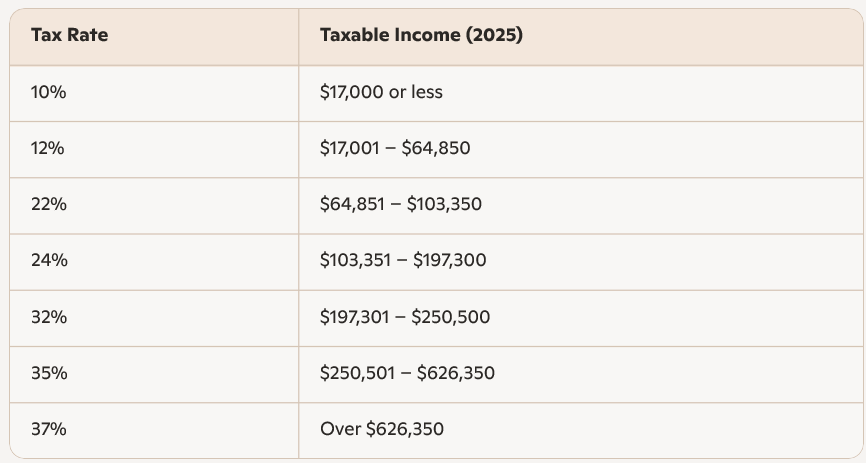
These thresholds reflect the IRS’s annual inflation indexing and are confirmed by IRS publications and financial institutions such as Fidelity and Morgan Stanley.
Standard Deduction Changes for 2025
The standard deduction also increases for 2025, helping reduce taxable income for most households. According to IRS‑aligned financial tables:
- Single: $15,000
- Married Filing Jointly: $30,000
- Head of Household: $22,500
These increases stem from the inflation adjustments and the permanent extension of the larger standard deduction under the One Big Beautiful Bill (OBBB), which preserved key provisions of the 2017 Tax Cuts and Jobs Act.
Why the 2025 Tax Brackets Matter
1. Your Marginal Tax Rate May Shift
Even if your income stays the same, inflation adjustments can move you into a slightly lower effective tax position. For example, the 22% bracket for single filers now begins at $48,476, up from $47,150 in 2024.
2. High Earners See Smaller Adjustments
The top 37% bracket for single filers now starts at $626,351, a modest 2.3% increase from the prior year. Because this increase is below current inflation levels, some high‑income taxpayers may feel more “bracket creep.”
3. Tax Planning Opportunities Expand
With higher thresholds, taxpayers may benefit from:
- Increasing 401(k) or IRA contributions
- Leveraging tax‑loss harvesting
- Timing income or deductions strategically
- Using charitable giving to reduce taxable income
Special Considerations for Americans Abroad
U.S. expats are subject to the same tax brackets, but the 2025 adjustments can influence how they use tools like the Foreign Earned Income Exclusion (FEIE) or Foreign Tax Credit (FTC). For example, the FEIE allows exclusion of up to $130,000 of foreign earned income in 2025, but the IRS “stacking rule” still applies—meaning excluded income can push remaining income into a higher bracket.
Capital Gains and 2025 Tax Brackets
Long‑term capital gains continue to be taxed at 0%, 15%, or 20%, with income thresholds adjusted for inflation. These adjustments were not changed by the 2025 OBBB legislation and follow the standard annual indexing process.
Short‑term capital gains remain taxed as ordinary income, meaning the 2025 brackets above apply directly.
How to Prepare for the 2026 Filing Season
Here are practical steps to optimize your tax position under the 2025 brackets:
1. Review Your Withholding
Use the IRS withholding estimator to ensure your employer is withholding the correct amount based on the new thresholds.
2. Maximize Tax‑Advantaged Accounts
Higher brackets mean greater value from:
- Traditional IRA contributions
- 401(k) deferrals
- HSA contributions
3. Consider Timing Income and Deductions
If you expect to move into a higher bracket in 2026, accelerating deductions or deferring income may reduce your overall tax burden.
4. Work With a Tax Professional
Given the complexity of the 2025 changes—especially for high earners, business owners, and expats—professional guidance can help you take full advantage of the new rules.
Final Thoughts
The 2025 tax brackets bring modest but meaningful changes for U.S. taxpayers. While the tax rates remain the same, the inflation‑adjusted thresholds and increased standard deduction can influence your overall tax liability. By understanding where your income falls and planning proactively, you can reduce your tax burden and make smarter financial decisions heading into the 2026 filing season.