March 2026 tax updates bring some of the most important deadlines and regulatory shifts of the filing season. With new inflation‑adjusted IRS thresholds taking effect, critical business filing dates landing mid‑month, and the final advance tax installment due, taxpayers should use March as a checkpoint to stay compliant and optimize their 2026 tax strategy. Below is a comprehensive breakdown of what individuals, business owners, and tax professionals need to know.
1. Major IRS Inflation Adjustments Now in Effect for 2026
The IRS has released its official inflation adjustments for tax year 2026, impacting more than 60 tax provisions. These changes apply to returns filed in 2027, but they influence planning decisions throughout 2026.
Updated Standard Deduction Amounts
For tax year 2026, the standard deduction increases to:
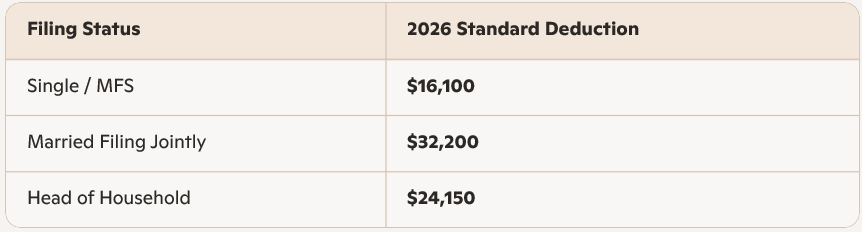
These increases reflect the One Big Beautiful Bill (OBBB) adjustments and provide modest relief for taxpayers facing rising living costs.
2026 Marginal Tax Brackets
The top tax rate remains 37%, applying to:
- Single filers earning over $640,600
- Married filing jointly earning over $768,700
Other bracket thresholds also rise, including:
- 35% bracket starting at $256,225 (single)
- 32% bracket starting at $201,775 (single)
- 24% bracket starting at $105,700 (single)
These inflation‑indexed brackets help prevent “bracket creep” as wages rise.
Other Notable Adjustments
- AMT exemption rises to $90,100 for single filers.
- Estate tax exclusion increases to $15,000,000.
- Adoption credit increases to $17,670.
These updates make March an ideal time to revisit withholding, estimated taxes, and long‑term estate planning.
2. Critical March 2026 Filing Deadlines for Businesses
March is one of the busiest months for business tax compliance. Several major deadlines fall on March 16, 2026, since the 15th is a Sunday.
Partnerships (Form 1065)
Partnerships and most multi‑member LLCs must file Form 1065 by March 16, 2026.
Key reminders:
- Schedule K‑1s must be furnished to partners by the same date.
- Form 7004 allows a six‑month extension to September 15, 2026.
- Late filing penalties are steep: $255 per partner, per month, up to 12 months.
Partnerships with foreign partners or international transactions may also need to file Forms 8865 or 8804.
S Corporations (Form 1120‑S)
S corporations must file Form 1120‑S by March 16, 2026.
Important notes:
- K‑1s must be issued to shareholders by the same date.
- Extensions require Form 7004, also extending to September 15, 2026.
- An extension to file does not extend the deadline to pay taxes owed.
S‑Election Deadline (Form 2553)
Businesses electing S‑corporation status for 2026 must file Form 2553 no later than March 15, 2026.
Tax professionals strongly recommend faxing Form 2553 and keeping transmission confirmation, as the IRS has a history of losing or failing to process these elections.
3. Final Advance Tax Installment Due March 15, 2026
The fourth and final advance tax installment for the 2025–2026 financial year is due March 15, 2026. Although the date falls on a Sunday, taxpayers can still pay electronically without disruption.
Who Must Pay Advance Tax?
Advance tax applies when total tax liability exceeds ₹10,000 after TDS/TCS and credits (India‑specific rule from the sourced article). While this rule applies internationally only in certain jurisdictions, the principle is universal: taxpayers with significant non‑withheld income must prepay taxes.
This includes:
- Freelancers and independent contractors
- Investors with capital gains
- Landlords with rental income
- Salaried individuals with substantial side income
Payment Flexibility
- Online payments are available 24/7, including weekends and holidays.
- Offline payments can be made at banks on Saturday with a generated challan.
For U.S. taxpayers, this serves as a reminder to review estimated tax obligations for 2026, especially if income has increased or diversified.
4. Legislative and Compliance Trends to Watch in March 2026
March is also a checkpoint month for broader tax policy developments.
Impact of the One Big Beautiful Bill (OBBB)
The OBBB continues to reshape:
- Standard deductions
- Bracket thresholds
- Credits and exemptions
Taxpayers should monitor IRS updates throughout the spring as additional guidance is released.
IRS Administrative Challenges
Legal challenges around taxpayer privacy and data handling have increased scrutiny on IRS processes. While these issues do not directly change filing requirements, they may affect:
- Processing times
- Identity verification procedures
- Audit selection algorithms
5. Tax Planning Tips for March 2026
For March 2026 tax updates to stay ahead of the curve, consider the following strategies:
Review Withholding and Estimated Taxes
With new 2026 brackets and deductions, adjust your W‑4 or estimated payments to avoid surprises next year.
Finalize Business Filings Early
Partnerships and S‑corps should not wait until the week of March 16. Missing K‑1 deadlines can create cascading delays for individual returns.
Confirm S‑Election Status
If electing S‑corp treatment for 2026, verify that Form 2553 was received and processed.
Evaluate Estate and Gift Planning
The increased estate exclusion for 2026 may offer new planning opportunities.
Final Thoughts
March 2026 tax updates bring a mix of new IRS thresholds, critical business filing deadlines, and important payment requirements. Whether you’re a business owner preparing K‑1s, an individual adjusting to new tax brackets, or a freelancer managing estimated taxes, March is a pivotal month for staying compliant and optimizing your tax position for the year ahead.
This article provides information only and should not be construed as advice. It is provided without warranty of any kind.