Social Security remains a cornerstone of retirement planning for millions of Americans. In 2025, several key changes are reshaping how benefits are calculated, distributed, and taxed. Whether you’re nearing retirement or already receiving benefits, understanding these updates is essential for maximizing your income and avoiding surprises.
Cost-of-Living Adjustment (COLA)
The Social Security Administration (SSA) has announced a 2.5% cost-of-living adjustment changes for 2025, down from 3.2% in 2024. This modest increase reflects cooling inflation trends and marks the lowest COLA in four years.
- Average monthly benefit: Rising from $1,927 to $1,976
- Married couples: From $3,014 to $3,089
- SSI recipients: Individuals will receive $967, and couples $1,450
While the COLA helps offset inflation, rising Medicare Part B premiums—up to $185/month—may absorb much of the gain.
Higher Payroll Tax Thresholds
In 2025, the taxable wage base for Social Security payroll taxes changes in 2025 increases from $168,600 to $176,100. This means high earners will pay more into the system:
- Employees: Up to $465 more annually
- Self-employed: Up to $930 more annually
This adjustment ensures the program continues to collect sufficient revenue from higher-income workers.
Retirement Age Language Overhaul
Congress is advancing the Claiming Age Clarity Act, a bipartisan bill aimed at simplifying Social Security terminology. While the actual retirement ages remain unchanged, the language used to describe them will be updated:
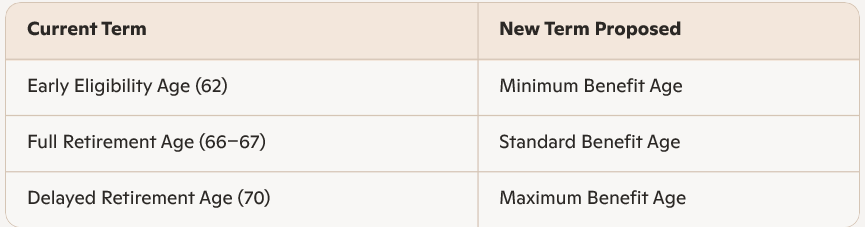
This change is designed to help Americans better understand the trade-offs of claiming benefits at different ages.
Work Credit Requirements Increase
To qualify for Social Security, workers must earn 40 credits over their career. In 2025, the earnings required for one credit rise from $1,730 to $1,810. That means:
- Four credits: Requires $7,240 in annual earnings
- Impact: May affect part-time and seasonal workers
This adjustment reflects wage growth and ensures credits remain tied to meaningful work activity.
Social Security Fairness Act Eliminates WEP and GPO
Passed in January 2025, the Social Security Fairness Act eliminates two controversial provisions:
- Windfall Elimination Provision (WEP)
- Government Pension Offset (GPO)
These rules previously reduced benefits for retirees who received pensions from employers that didn’t pay into Social Security. Their removal has led to benefit increases—sometimes over $1,000/month—for former teachers, police officers, and firefighters.
Mandatory Electronic Payments
By September 2025, all Social Security beneficiaries must switch to electronic payment methods. Paper checks are being phased out to improve efficiency and reduce fraud. Options include:
- Direct deposit
- Direct Express debit card
- Electronic transfer to a bank account
This change aligns Social Security with broader federal efforts to modernize benefit delivery.
Overpayment Recovery Rate Adjusted
In early 2025, President Trump revised the Social Security overpayment recovery rate:
- Previous rule: 10% of monthly checks withheld
- New rule: Up to 50% of checks can be withheld
While this speeds up repayment, it may create financial strain for affected retirees. Beneficiaries should monitor their payment history and contact SSA if discrepancies arise.
Earnings Limits for Early Claimants Rise
If you claim Social Security before reaching full retirement age and continue working, your benefits may be reduced if you exceed certain income thresholds. In 2025, these limits increase:
- Under FRA: $23,400 → $24,360
- Reaching FRA in 2025: $62,160 → $64,800
Once you reach full retirement age, these limits no longer apply.
Social Security 2025 Changes Legislative Impact
The Social Security Trust Fund faces depletion by 2033, potentially triggering a 23% benefit cut. Contributing factors include:
- Demographic shifts (aging population)
- Reduced taxable income due to the “Big, Beautiful Bill” signed by President Trump, which introduced deductions for seniors and tip earners
While insolvency doesn’t mean Social Security will disappear, it underscores the need for strategic retirement planning and potential legislative reform.
Final Thoughts
The Social Security changes in 2025 reflect a mix of inflation adjustments, legislative reforms, and modernization efforts. Retirees and workers alike should:
- Review their benefit statements
- Adjust retirement timelines
- Monitor tax implications
- Consider delaying benefits for higher payouts
Staying informed is key to making the most of your Social Security income.