When it comes to stretching your dollar, few factors are as impactful as sales tax. While most U.S. states impose a sales tax on goods and services—ranging from modest to eye-watering—five states stand out by not charging any state-level sales tax at all. For consumers, this means lower prices at checkout. For businesses, it can mean simplified accounting and a competitive edge. In this article, we’ll explore the five states with no sales tax, how they make up for lost revenue, and what it means for residents, visitors, and entrepreneurs.
What Is Sales Tax?
Sales tax is a consumption tax imposed by state and local governments on the sale of goods and services. It’s typically added at the point of sale and varies widely across jurisdictions. While some states charge upwards of 7% or more, others offer exemptions for necessities like groceries or prescription drugs. But five states go even further—they don’t charge any state sales tax at all.
The Five States With No State Sales Tax
As of 2025, the following states do not impose a state-level sales tax:
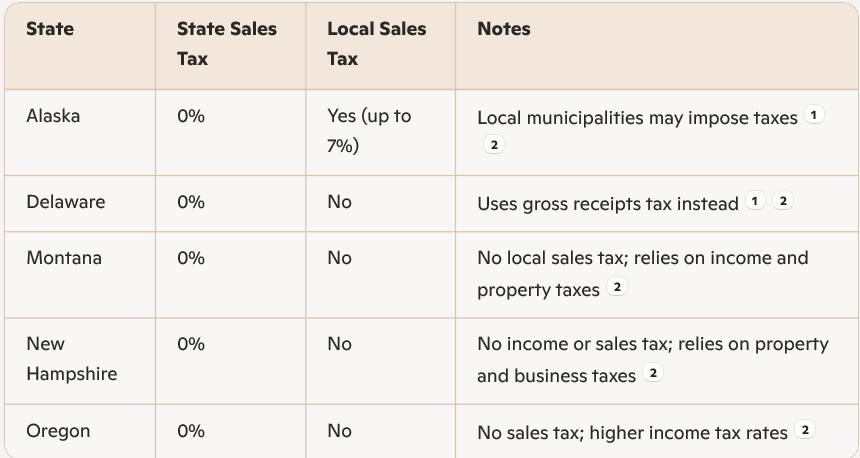
Let’s break down each state’s approach.
Alaska: The Exception That Proves the Rule
Alaska doesn’t impose a statewide sales tax, but that doesn’t mean you won’t pay any tax at the register. Many municipalities—including Juneau and Ketchikan—levy local sales taxes that can reach up to 7%. Anchorage and Fairbanks, however, remain tax-free zones for shoppers. Alaska also lacks a personal income tax, making it one of the most tax-friendly states overall. To compensate, the state relies heavily on oil revenues and local excise taxes on items like alcohol and tobacco.
Delaware: Business-Friendly, Shopper-Savvy
Delaware is a haven for both consumers and corporations. It has no state or local sales tax, making it a popular destination for big-ticket purchases like electronics and jewelry. Instead of a sales tax, Delaware imposes a gross receipts tax on businesses, which is calculated based on total revenue rather than profit. This system allows the state to generate revenue without burdening consumers directly. Delaware also boasts low property taxes and no inventory tax, further enhancing its appeal to businesses.
Montana: Tax-Free Simplicity
Montana offers a straightforward tax structure with no state or local sales tax. Residents pay a moderate income tax (up to 6.75%) and property taxes help fund local services. For tourists, this means no surprise charges on hotel stays or retail purchases. For businesses, it simplifies compliance and bookkeeping. Montana’s lack of sales tax is especially attractive to retirees and remote workers seeking a low-cost lifestyle in a scenic setting.
New Hampshire: No Sales or Income Tax
New Hampshire is one of the few states that doesn’t impose either a sales tax or a personal income tax. Instead, it relies on property taxes and business taxes to fund public services. This makes it a magnet for high-income earners and entrepreneurs looking to minimize their tax burden. However, the state’s high property taxes can offset some of the savings, especially for homeowners. Still, for renters and shoppers, New Hampshire offers a tax-free paradise.
Oregon: Progressive but Sales Tax Free at Checkout
Oregon rounds out the list with zero state or local sales tax. The state compensates with a relatively high personal income tax, which can reach up to 9.9% for top earners. Oregon’s tax structure is designed to be progressive, placing more burden on income rather than consumption. This benefits lower-income residents and encourages spending. Portland, the state’s largest city, is a popular destination for tax-free shopping, especially for residents of neighboring Washington, which has one of the highest sales tax rates in the country.
No Sales Tax: Economic and Lifestyle Impacts
States without sales tax offer several advantages:
- Lower consumer costs: Shoppers save money, especially on large purchases.
- Business incentives: Retailers can attract out-of-state customers and simplify tax compliance.
- Tourism boost: Visitors are more likely to spend when prices are lower.
- Policy flexibility: States can tailor their revenue strategies to fit local needs.
However, these states must find alternative revenue sources. Most rely on income, property, or business taxes, and some impose excise taxes on specific goods like fuel, alcohol, or tobacco.
Conclusion
Choosing to live or shop in a state with no sales tax can lead to meaningful savings, but it’s important to consider the full tax picture. While the checkout price may be lower, other taxes—like income or property tax—may be higher. Still, for savvy consumers and strategic businesses, these five states offer a compelling blend of affordability and opportunity.